The History of Nea Michaniona: From Kyzikos to the Thermaic Gulf
The “Nea” (New) in the name isn't decoration. There was an “old” Michaniona too, on the other side of the Aegean, and its story explains almost everything about the village you're about to get to know: its bond with the sea, its August festival, even the way people greet you in the street.
Michaniona of Kyzikos
The original Michaniona stood at the north-eastern tip of the Kyzikos peninsula, on the Sea of Marmara. In the early 20th century it had about 230 houses and 1,600 residents, mostly fishermen and farmers. There's a legend that its first settlers came from Chania in Crete, hence the name. It's a lovely story, but the village already appears in Ottoman registers in the 14th century, so nobody really knows.
1922
In late August 1922, as the Asia Minor front collapsed, the people of Michaniona left their homes, taking whatever fitted into a bundle. One of them, the church's lamp keeper, hid the icon of Panagia Faneromeni among her clothes. You'll find more about it in our festival article.
The journey took months. First they crossed to Eastern Thrace, where they stayed about a month. When that area was evacuated too, in October 1922, a steamer took them to the spa town of Loutra Aidipsou on Evia, where they spent the winter.
Arriving on the Thermaic Gulf
On 20 November 1922 the Settlement Committee, led by Margaritis Evangelidis, a Michaniona-born professor at the University of Athens, decided where they would live: Megalo Karaburnu, at the mouth of the Thermaic Gulf, a place with sea and fish like the one they had left. On 30 April 1923 the steamer “Thetis” brought them to Thessaloniki. Refugees from nearby villages back home, such as Agia Paraskevi, Kastelli and Kerasia, settled alongside them. That's how Nea Michaniona was born.
The first years were hard: tents, then makeshift huts, then stone houses. The foundations of the first church were laid in 1927, and it opened in 1932. In some of the old lanes you can still see houses from that time.
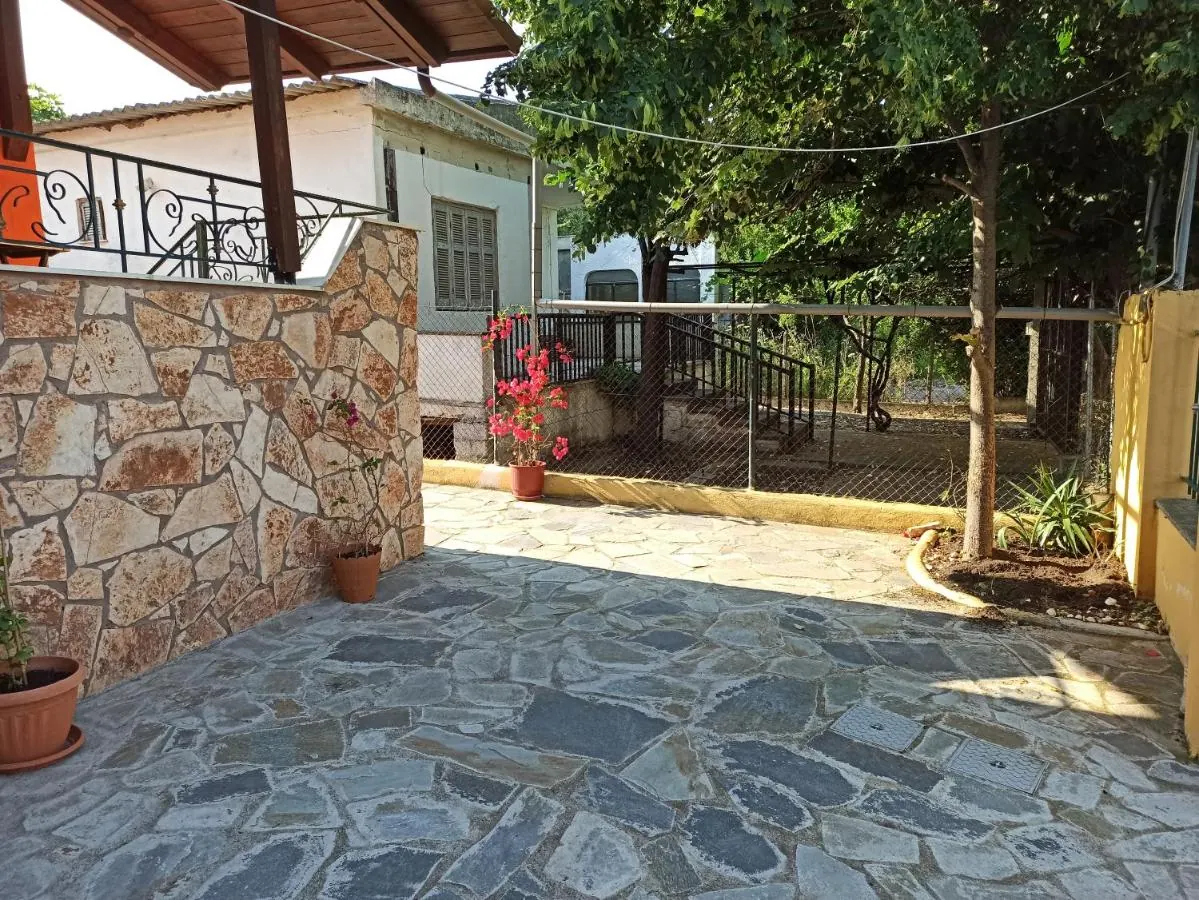
Stay at Theodoras House
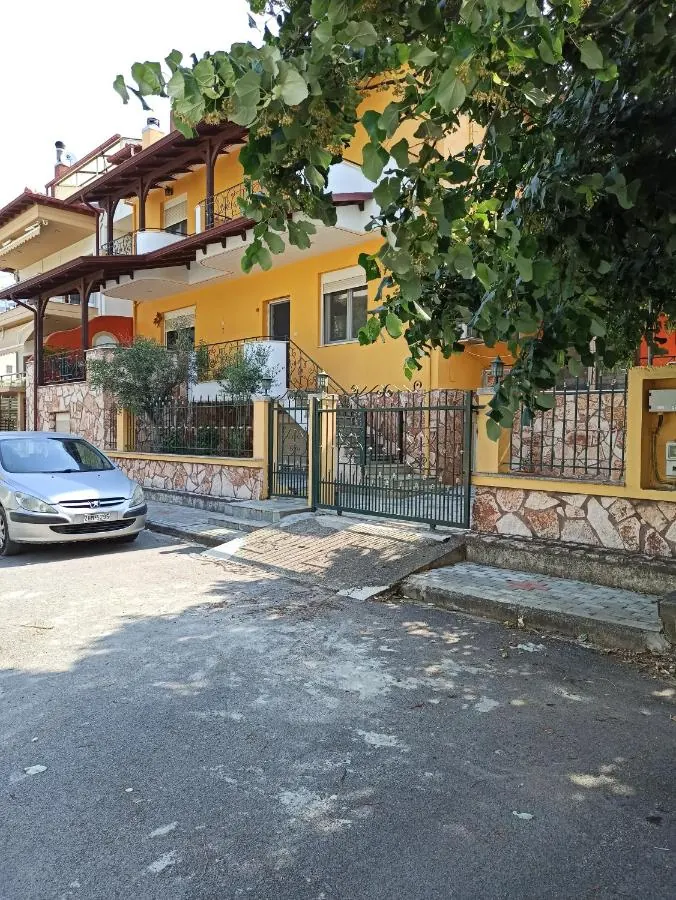
A 91 m² home with a garden and barbecue in Nea Michaniona, for up to 7 guests, with free parking. Everything in this guide is a short drive away.
From refugees to fishermen
The people of Michaniona knew the sea, and the Thermaic Gulf was generous to them. Within a few decades the village became one of the country's most important fishing centres. Today it's home to Greece's biggest fishing fleet and a fish market described as the hub of the fish trade in the Balkans. Read more in our article on the harbour and fish market.
And yet the memory never faded. Every 22 August, when the icon is carried through the streets, the village remembers. Ask one of the older locals at the kafeneio where their family comes from, and get ready for a good story.
FAQ
Where did the people of Nea Michaniona come from?
From Michaniona, a village at the north-eastern tip of the Kyzikos peninsula on the Sea of Marmara. Refugees from neighbouring villages settled with them.
When was Nea Michaniona founded?
The refugees reached Thessaloniki on 30 April 1923 and settled in the Megalo Karaburnu area, where they built their new village.
Sources: voria.gr, Ιστορίες Παλιάς Θεσσαλονίκης · Visit Central Macedonia, Nea Michaniona · ERT News, αλιείς Νέας Μηχανιώνας (2026)